Bloomberg Connects Feature
Priseman Seabrook Collection – Highlights
Susan Gunn artwork featured on Bloomberg Connects
I’m delighted to share that my work is now featured on Bloomberg Connects, the free global arts and culture app, as part of the Highlights from the Priseman Seabrook Collection.
Bloomberg Connects is an invaluable digital resource that allows users to explore museums, galleries, historic sites, and collections from around the world through curated content, images, and audio guides. The app offers a way to encounter artworks slowly and attentively, beyond physical geography, and has become an important platform for artists, institutions, and audiences alike.
Within the Priseman Seabrook Collection section, my painting is presented with an accompanying audio guide, featuring a text read by Robert Priseman — artist, writer, collector, and founder of Contemporary British Painting. His reading offers a thoughtful reflection on the work, situating it within the wider concerns of materiality, process, and contemporary painting practice.
To be included in this context, alongside such a significant collection and within a platform dedicated to public engagement with art, is a real honour. The app enables viewers to encounter the work intimately — to listen, look, and return — echoing my own interest in sustained attention and the quiet authority of materials.
The Bloomberg Connects app is free to download, and I warmly encourage artists, students, collectors, and art lovers to explore it. It offers an expansive and generous way to engage with art and culture internationally, and to discover works and voices across disciplines and geographies.
You can download Bloomberg Connects via the App Store or Google Play and search for the Priseman Seabrook Collection to listen and explore.
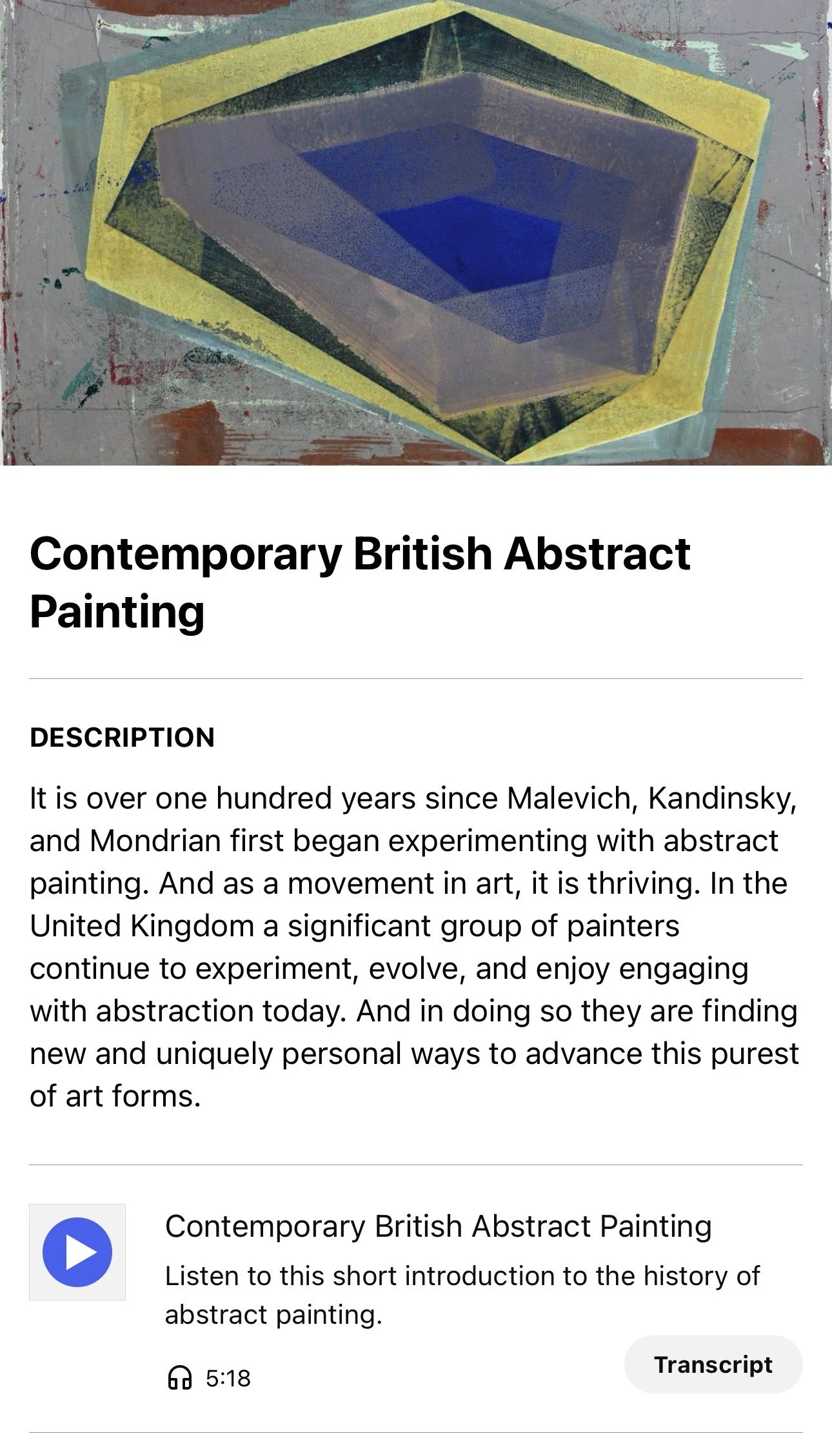
The Priseman Seabrook Collection
The Priseman Seabrook Collection | Why We Made it?
Audio transcript with Robert Priseman
Historically Britain has nurtured some of the world’s greatest painters. From Holbein in the 16th century to John Constable and Joseph Wright of Derby in the 18th, Turner and Atkinson Grimshaw in the 19th to Freud, R. B. Kitaj, Paula Rego, Bridget Riley, and Francis Bacon in the 20th century. This level of excellence in the art of painting in the United Kingdom has continued to evolve into the 21st century. Today we see a new generation of artists who have sought to make the production of significant painting their life’s work.
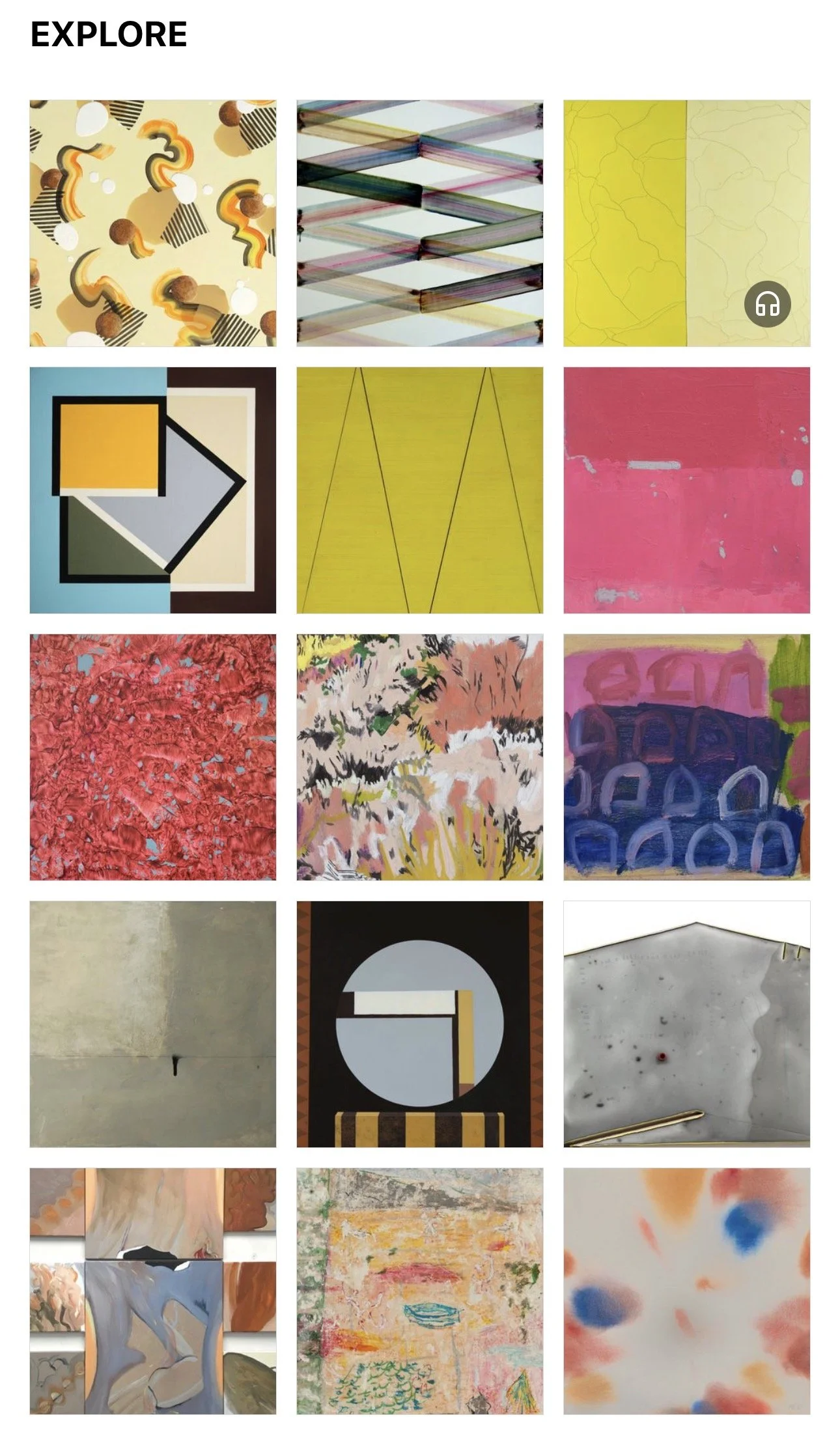
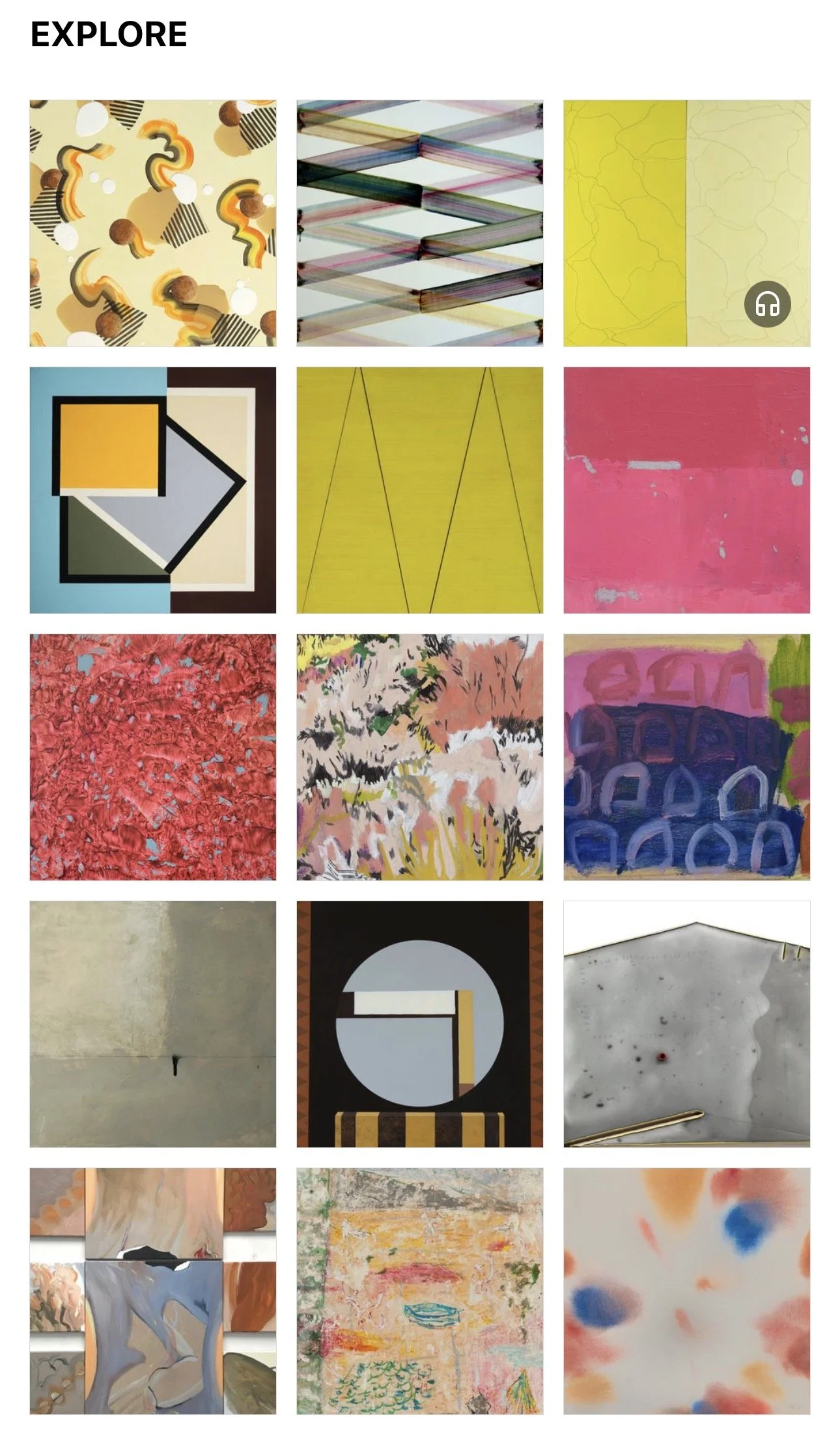
In 2014 I came to realise that many of this new wave of British painters had yet to be collected with same the geographical and chronological focus of both their predecessors and overseas contemporaries. So, with the help of my wife, I began the process of bringing together a body of work by artists which followed the very simple criteria of being painting, produced after the year 2000, within the British Isles. The painters we began collecting included European Sovereign Painters Prize winner Susan Gunn, John Moores Prize winner Nicholas Middleton, 54th Venice Biennale exhibitor Marguerite Horner, East London Painting Prize Winner Nathan Eastwood, Birtles Prize Winner Simon Burton, and Contemporary British Painting Prize winners Cathy Lomax (2016), Narbi Price (2017), and Lesley Bunch (2022).
So far, we have brought together over 200 paintings by 112 artists, which has now become the very first collection of art dedicated to 21st-century British painting in the United Kingdom.
Creating this focus has enabled us to uncover a number of themes which at first were hard to discern. In it we can see that painting is now expressing itself along the same lines as the slow food movement, meditation, and unplugged music. Within the era of the digital revolution, it offers a direct and contemplative connection with the handmade, with real objects which mediate our emotional makeup. We see this most clearly in the fact that the paintings within the collection display no clear and consistent group narrative or movement. They are instead an assembly of highly individualistic interpretations which offer visual interactions with the physical world.
Another big change we began to notice was the shift from a predominantly male dominance in the field, which was experienced up to the middle of the 20th century, to a substantial ascendancy by female practitioners. Of the 112 painters so far represented in the collection, 60 are women.
Within the field, the multitude of ‘isms’ which previously made up the landscape of 20th-century art have instead been replaced by the one big ‘ism’ of the 21st century: ‘individualism’. In the light of this we may begin to think of paintings not as works of art produced from the hands of specifically female, male, or non-binary artists, but from a group of individuals—unique, talented, and united by the common bonds of time and place and a desire to connect to the elusive experience of what it is to be human.
Yet we also notice that some things have remained consistent. When we look back to the past we notice how many of the greatest painters who practiced in the UK were born abroad, including Holbein, Freud, and Auerbach, who were born in Germany; Bacon, who was from Ireland; Kitaj the USA; and Paula Rego, who was born in Portugal. Indeed, it is this international influence which has probably helped create such a strong and vibrant tradition in the genre in Britain. Being reflective of our civilisation as a broadly international and multicultural society. In the 21st century we see this strand of internationalism continuing in British painting and being represented in the collection by Monica Metsers, who was born in New Zealand; Marius von Brasch, Claudia Böse, and Silvie Jacobi, who were born in Germany; Marco Cali from Italy; Laura Leahy, Lesley Bunch, and Julie Umerle, who are from the USA; Alison Pilkington, who is from Ireland; and Ehryn Torrell, who was born in Canada.
In bringing this body of work together we hope to explore, promote, and question the relevance of painting and the handmade work of art in the digital age through talks, exhibitions and loans. Over the past few years we are delighted to have worked with many museums who include the National Museum of Poland, The Yale Centre for British Art, The China Academy of Art, Huddersfield Art Gallery, The University Of Arizona Museum of Art, Ipswich Museums and Gallery, Tianjin Academy of Fine Arts, Yantai Art Museum, and the Jiangsu Art Museum, Nanjing.
I am delighted to say the collection continues to evolve through direct working and personal relationships with many of the artists represented. Being enabled by painting swaps, donations, and occasional purchases. We hope you enjoy exploring it!
Robert Priseman 2025
Susan Gunn | An Overview by Robert Priseman
Audio transcript
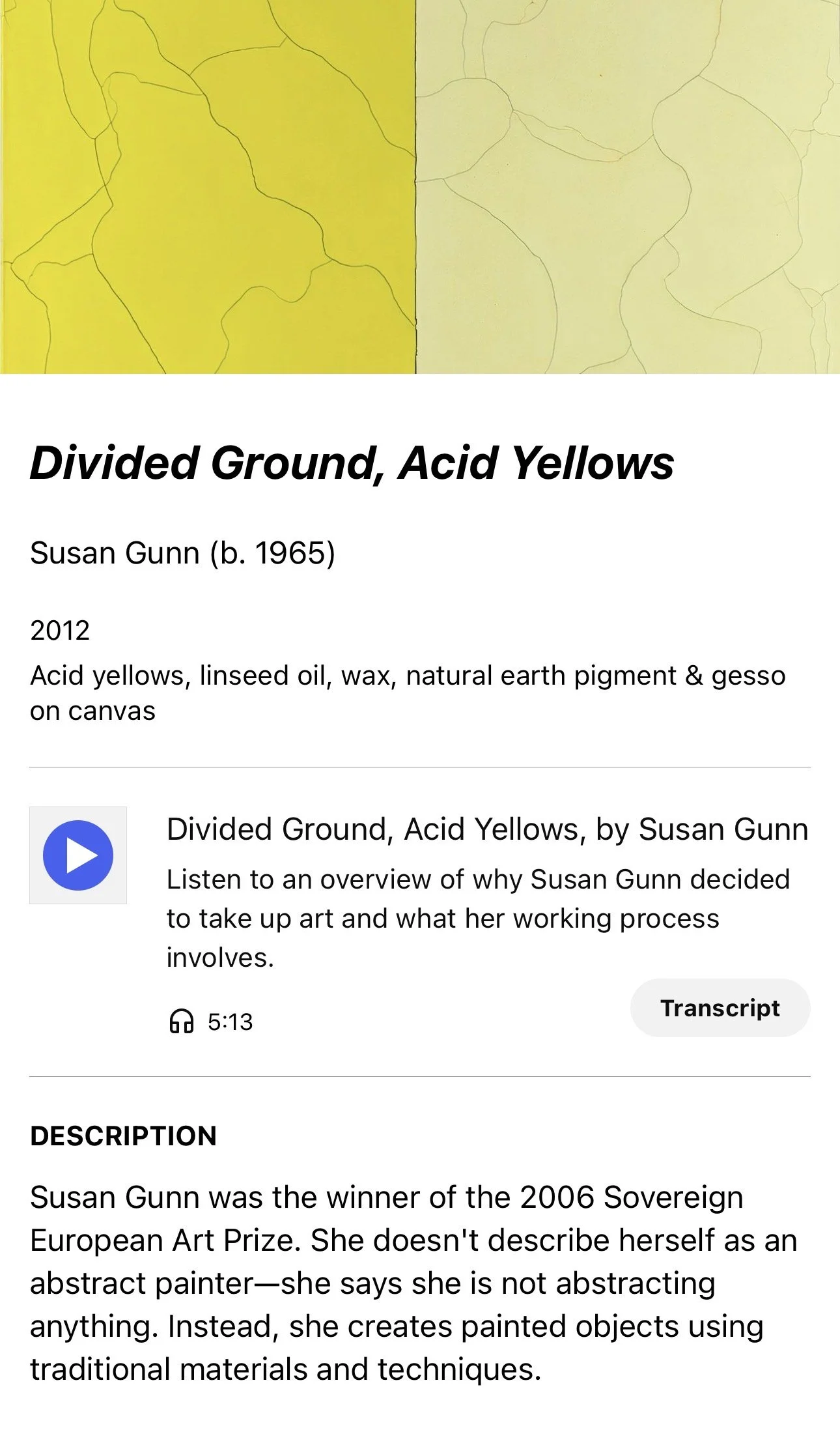
Susan Gunn was the winner of the 2006 Sovereign European Art Prize. She doesn't describe herself as an abstract painter as she says she is not abstracting anything. Instead, she creates painted objects using traditional materials and techniques.
Gunn worked initially as a wedding dress designer on leaving school, until the birth of her first daughter, Francesca, who was diagnosed with leukaemia just after her first birthday. Francesca lived for a further eighteen months, during which time she underwent intensive chemotherapy. While in hospital with her daughter, Gunn drew portraits of her, because, she says, ‘it didn't seem right somehow to take photographs of her in there’. Following Francesca’s death and the birth of two subsequent children, Gunn enrolled at art school at the relatively late age of thirty-five. She said that ‘as I developed my practice I had a strong feeling that I didn't want to share the images in my head with anyone else’. Feeling instead that ‘I wanted to go beyond what could be immediately defined - for me the cracked and marbled surface of gesso was and is very much like a memorial slab’. The painted surface in this sense appears to represent Gunn’s weekly ritual of cleaning her daughter’s gravestone, where in the polishing she declared an attempt to try to impart dignity to the memory of her lost daughter.
Her often large-scale, monochromatic canvases, such as we see here in Acid Yellows, present the viewer with a delicately fractured surface of uniformly coloured gesso contained within a series of straight edges which are carefully defined by human hand. She describes the end result of her work as being ‘like a mirror of life’ where ‘things happen which are beyond our control’. In this way, her canvases present the viewer with a metaphorical meditation on the fragility of life, beautiful in all its flawed and imperfections.
Gunn’s working process begins with the building up of layers of gesso mixed with pure pigment over the surface of a canvas. Gesso is a traditional medium and is usually comprised of chalk mixed with glue formed from the skins of rabbits or calves. Typically it is employed as a primer to coat solid surfaces such as wooden painting panels, carved furniture, and picture frames over which oil paint and gilding can be applied. In the past, painting panels were prepared by Italian craftsmen with a base layer of gesso grosso (rough gesso) which was comprised of a coarse plaster, over which a series of thin layers of finishing gesso were then applied. These were prepared with a fine plaster slaked in water to produce an opaque, white, reflective surface. The absorbent quality of gesso makes it suitable for painting on in all media, as well as providing an ideal surface for the application of gold leaf.
Gesso, which is typically applied in ten or more fine layers, has a brittle consistency susceptible to cracking, and it is this property Gunn manipulates in an attempt to alter and control the way cracks appear within the fabric of her paintings. Speeding up or slowing down the drying time of gesso contributes to the way the fractures form. Heating up the surface creates more cracks, and cooling it down produces less. Correspondingly, when more layers of gesso are applied to the surface the fissures appear more pronounced. The cracks created by Gunn form clean breaks in the medium, just like shattered shards of glass, which extend through to the canvas, unlike the craquelure we see in old paintings - which rests wholly on the surface.
Once the gesso on Gunn’s paintings has dried, the surface is initially rough. Gunn then smooths this by polishing it with wax and oil, while also applying water to the gesso, which treats it as a kind of watercolour paint, allowing the pigment to seep through to the canvas surface and stain it. This renders the white of the canvas imperceptible to the viewer.
The loss of those we love reminds us of how precious life is. In representing this in art, Gunn offers a series of universal images which depict the fragile and lost in all of us, highlighting our consistent inability to pay close attention to that which is most important. In doing so, she creates a metaphor for our broken nature, which clearly defines the beauty of our imperfect humanity.
Robert Priseman 2025